Correct identification is an important aspect on which the proper connection between a researcher and their professional contributions depends. The digital identifier ORCID helps with this. What are its features and why does a scientist need to have this unique number? We examine this in detail in our article.
Key features of ORCID
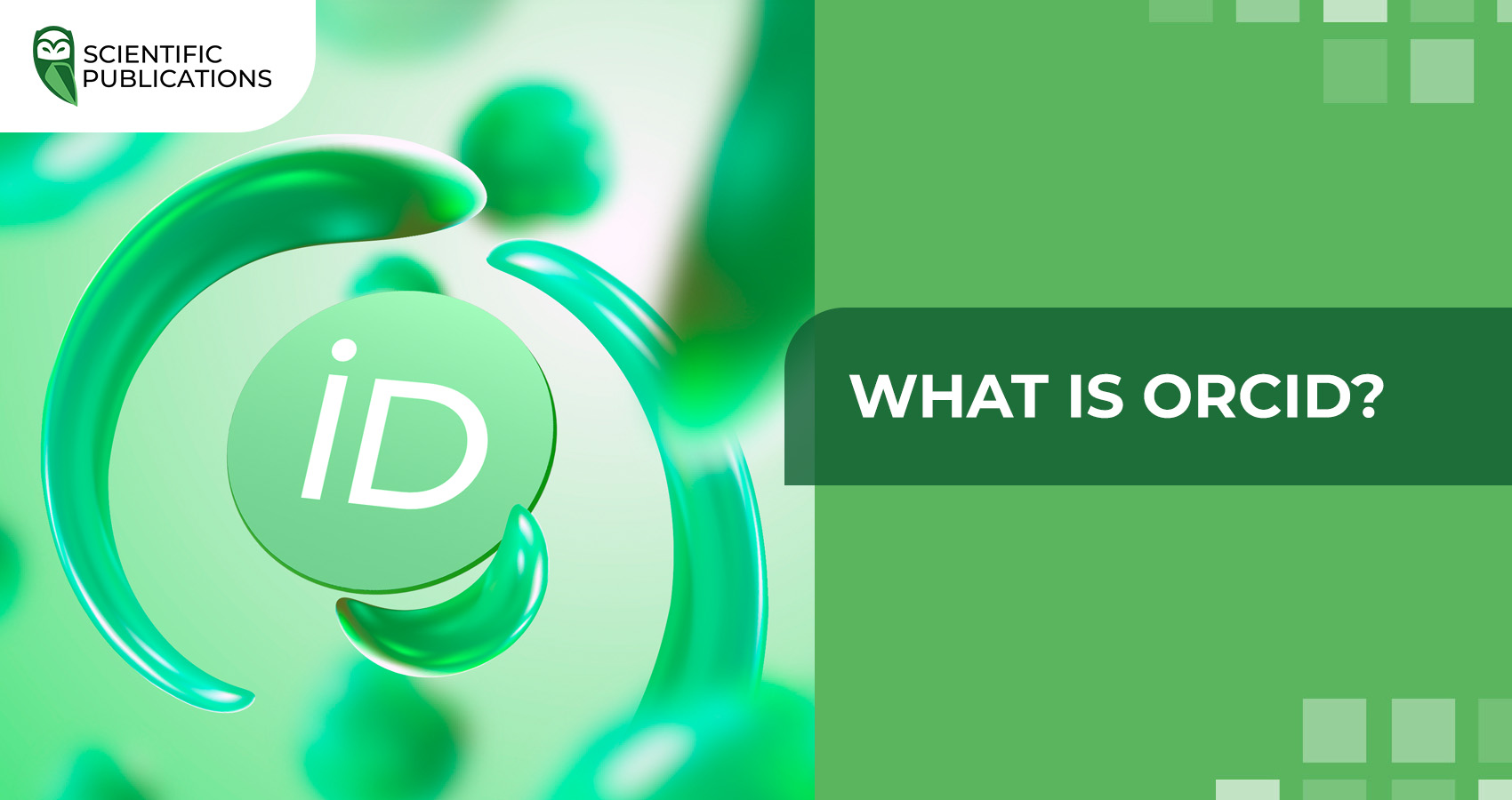
Open Researcher and Contributor ID (ORCID) is used for the correct identification of an author and their connection with professional contributions. The identifier is presented in the format of a link and contains a 16-digit number. For example, a researcher’s ORCID may look like this: https://orcid.org/0000-0001-2345-6789.
How does ORCID registration take place?
The procedure for registering a digital identifier is free of charge and takes place on the official ORCID website. The user needs to complete the following stages:
- Go to the ORCID website.
- Fill in the registration form.
- Agree to the terms of use.
- Automatic assignment of an ORCID iD.
- Confirm the email address.
- Complete the ORCID profile.
The ORCID identifier is a unique number that is assigned to a researcher once and accompanies them throughout their entire scientific career. Because it does not change, the author can be correctly identified even if personal data in the profile is edited.
What information does an ORCID profile contain?
An ORCID profile is a personal record of a researcher linked to their unique 16-digit number. The user needs to complete it by correctly specifying the following data:
- Personal information of the researcher. It is necessary to specify the name, biography, keywords, country or region where the research activity is carried out, links to personal websites, etc.
- Contact details. In this section, it is worth indicating the email addresses used for login and identity confirmation.
- Affiliations. If relevant data is available, places of work, education, qualifications, membership in certain organisations, professional distinctions and other types of academic activity should be correctly specified.
- Scientific works. Existing articles, books, conference materials, dissertations, datasets and other research outputs should be added to the profile.
In most cases, the researcher needs to complete the profile manually, but some information can be imported from other resources. For example, scientific works can be added using DOI or other identifiers.
Why is it important for a scientist to have ORCID?
ORCID is one of the digital identifiers that influence the international visibility of a researcher’s scientific works. In particular, it helps in the following important processes:
- Correct identification of the author. ORCID is useful in cases where authors’ names coincide or certain information in the profile changes.
- Connection with publications and other research outputs. ORCID reduces the risk of incorrect attribution of authorship, which is why it is often used by publishers.
- Simplification of article submission and grant applications. Journals, publishers, scientific platforms and funding organisations can often put forward ORCID as one of the requirements for submitting manuscripts, completing applications or confirming authorship.
- Increasing academic visibility. Thanks to the ORCID identifier, the results of scientific activity become more accessible to journals, scientific institutions, funds and international partners.
- Automatic profile updating. The integration of ORCID with publishing or scientific systems reduces the amount of manual work. In this way, data on new publications can be imported promptly.
Although ORCID is not a general requirement for researchers, it is often necessary for certain processes of academic activity. Therefore, in order to avoid unnecessary difficulties in the publication process, it is better to create your own unique digital identifier.
Need help with publishing a scientific article? Contact the company Scientific Publications. Our specialists are ready to provide professional support. Leave a request on the website, and our manager will contact you shortly. Together towards new scientific achievements!